


The evolution of UAVs (Unmanned Aerial Vehicles), commonly known as drones, has been driven by two essential needs: reducing weight without sacrificing structural integrity, and increasing overall aircraft efficiency, especially in systems that demand high autonomy, manoeuvrability and payload capacity.
LPBF (Laser Powder Bed Fusion), widely adopted in the aerospace sector, is a key technology for meeting these objectives.
At Hypermetal, we specialise in metal additive manufacturing with EN9100 certification. We produce critical UAV components using LPBF, enabling solutions that would be impossible with traditional manufacturing processes.
1. Ultralight Structures and Optimised Topologies
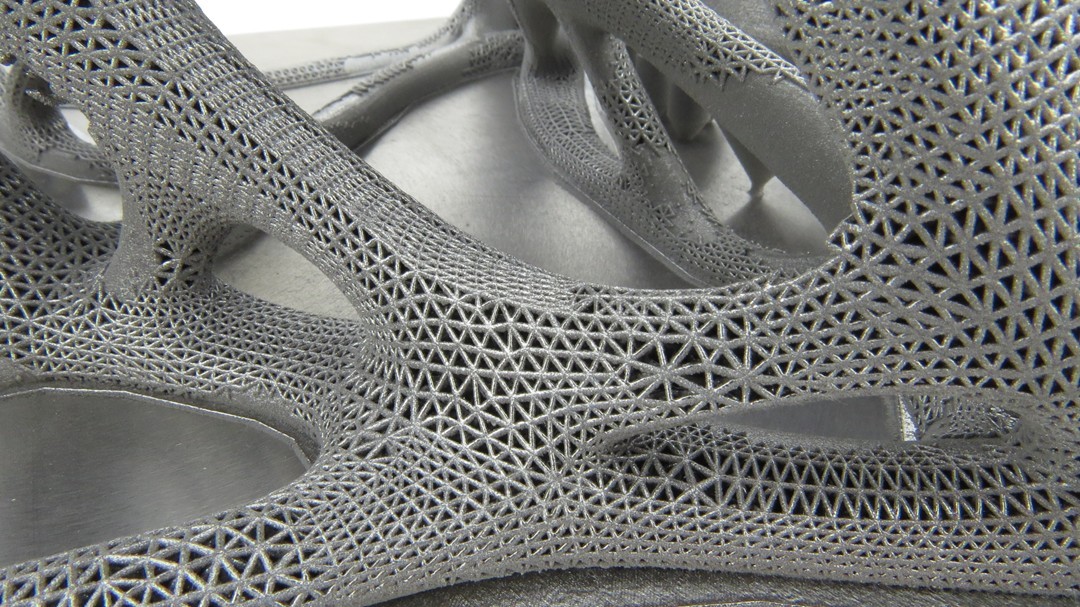
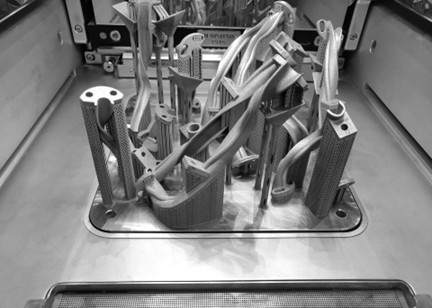
LPBF enables the fabrication of highly optimised geometries — internal lattices, localised reinforcements, thickness gradients — reducing total mass by 20% to 60% while maintaining stiffness and mechanical strength.
In UAVs, this reduction results in:
- greater autonomy and range,
- improved power-to-weight ratio,
- increased payload capacity,
- lower operating costs.
2. Advanced Propulsion Components and Mission-Critical Systems
The growing use of UAVs in defence, surveillance and industrial applications requires increasingly efficient propulsion systems — from microturbines to hybrid engines. LPBF allows the production of:
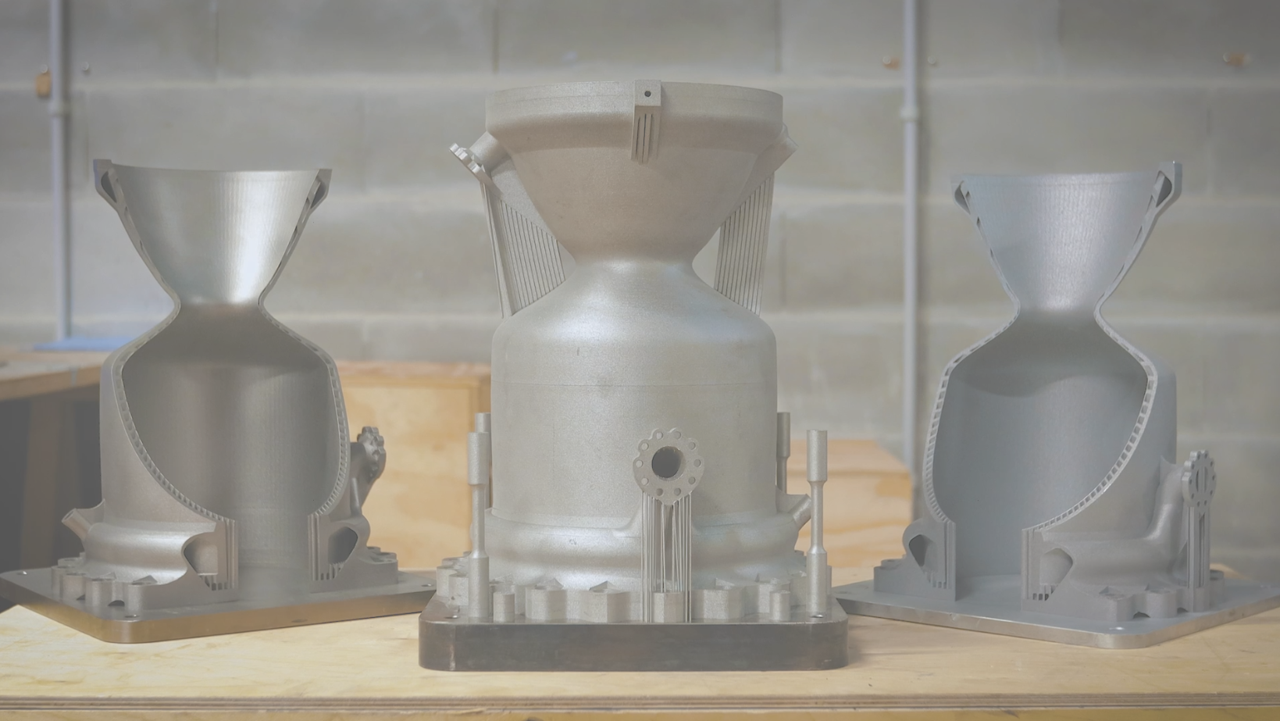
- combustion chambers with integrated cooling channels,
- integrated manifolds and diffusers,
- engine mounts resistant to severe thermal cycles,
- ultralight monolithic housings and structural components.
By eliminating joints and reducing part count, reliability increases and operational risk decreases — essential in autonomous aircraft.
Our expertise in space propulsion and high-tightness components transfers directly to UAV applications with demanding thermal and mechanical profiles.
3. Sealed Geometries and Functional Internal Channels
LPBF enables the creation of complex internal channels, crucial for UAV platforms that require:
- liquid or air-based cooling systems,
- thermal management of batteries,
- integrated internal cabling,
- mission units sensitive to temperature variation.
Hypermetal delivers sealed, reliable components with consistent performance — critical for platforms exposed to vibration, thermal cycles and continuous operation.
4. Rapid Development and Short Iteration Cycles
For UAV manufacturers, turning concepts into functional prototypes within days is a decisive competitive advantage.
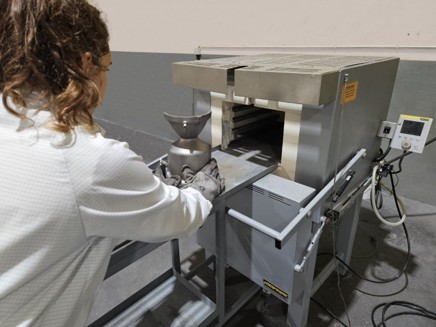
With full integration of design → LPBF → heat treatment → inspection, we drastically reduce time-to-market and enable OEMs to validate new aeronautical architectures quickly and safely.
5. Aerospace-Grade Quality and Operational Reliability
We operate under EN9100 and ISO 9001 standards, ensuring:
- full traceability,
- strict control of manufacturing parameters,
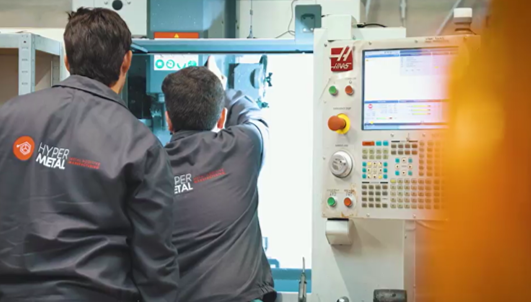
- detailed dimensional and metallographic inspection,
- mechanical and microstructural consistency.
For commercial, military or scientific UAVs, this means reliability and repeatability from the first flight.
Conclusion: Lighter, More Efficient and Technologically Superior UAVs
LPBF is not merely an alternative manufacturing method — it is a technological process that redefines what is possible in the UAV sector.
By combining advanced engineering, aerospace-grade quality and real-world experience in critical applications, Hypermetal positions itself as a technological partner for OEMs and integrators developing next-generation aerial systems.
UAVs produced with LPBF components benefit from:
- lighter structures,
- enhanced performance in adverse environments,
- integrated geometries,
- higher reliability,
- improved performance and autonomy,
- greater adaptability for complex missions.
Contact us for further info on how we can help you produce UAV. https://hypermetal.eu/en/contacts/